To Script or Not to Script
(What I learned from scripted lessons)

When I first heard of scripted lessons, I used to shudder. I couldn’t stand the idea of not using all the knowledge I had just acquired around the Science of Reading and planning my own lessons. I wanted to lead those lessons, but I mistakenly believed scripted lessons limited my decision-making power.
Fast forward to the last couple of years, when I have had the opportunity to implement Evidence-Based Literacy Instruction (EBLI), a print-to-speech approach, and Reading Mastery, a Direct Instruction curriculum. Time with both programs has illustrated how wrong I was. Scripts often get mischaracterized as ways to silence teacher input. You just follow the script, no thinking involved. In reality, what I found was that this couldn’t be further from the truth.
A good script, one that is designed with cognitive science principles in mind, is built to lighten the teacher’s cognitive load. Teachers make hundreds of minute decisions daily. Some of those decisions are so tiny that to an untrained eye they would go unnoticed.
The scripts I followed were meant to give me a leg up. I didn’t have to choose words, find a text to read, or decide what to say during an error correction. These scripts gave me the time and space to work on my instructional delivery. Don’t get me wrong. It is important to follow the plan on the page, but if you think you won’t be doing any lifting, you are sorely misunderstanding the power of a well-written script.
Here are the benefits I learned from engaging with a script:
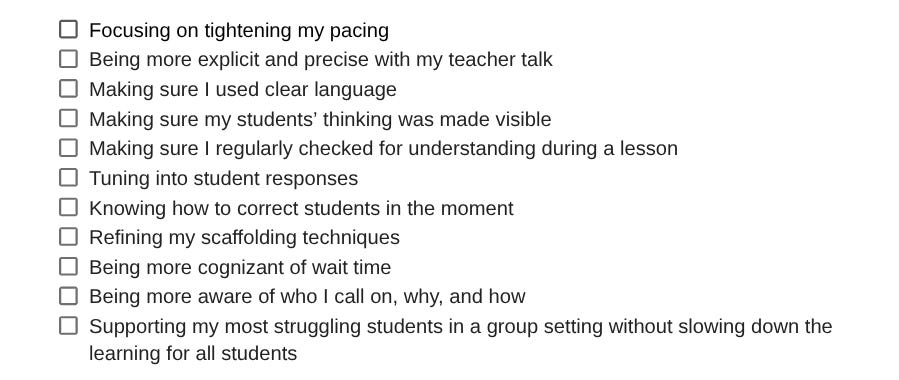
I recently read a blog by Laura Burke on making sure we do sweat the small stuff. The devil is in the details, they say. This is absolutely true. Following a script afforded me the chance to carefully and intentionally consider the smallest details of my teaching. An added benefit is that I was able to recognize what makes a good script as opposed to scripts that use ineffective practices and would not move my students further along. Scripts are powerful tools that, when understood, open doors for growing and developing your practice. They can be the skeleton of good teaching. The frame in which we hang our intricate decisions about how to support students. Teachers need to be free to think about who we call on first, which parts of the lesson had too many errors and need more repetition, and whether that student is answering in unison or slightly behind, and why? These are the questions that dig deeper into responsive teaching, not further away.
Scripted lessons do not take away your personality. Let me give you an example. When I give individual turns in a Reading Mastery lesson, I can still make it casual and fun by telling the kids, “It’s your time to shine” or “It’s your time to show what you know.” They get a kick out of these fun names, and I get to see where we are in our learning. When I am teaching other scripted lessons and a student makes a connection, they still get to share their story with the group and build their language skills. I still get to engage with the kids in my group and build our classroom community, but when we begin lessons, I know I have a solid structure to work from and can add myself into the mix.
Not all scripts are created equal:
As I said before, scripts can be powerful tools, but not all scripts are equally designed. That is why teachers and teacher teams must read lessons ahead of time and prepare the pieces they might need to add on. Many curricula rarely tell you how to make students’ thinking visible. They also throw in a lot of questions, but they don’t tell you which ones will most likely get your kids to the essential content and which ones can be eliminated. The two scripts I mentioned definitely provide very specific error correction procedures, but many other curricula do not. This is why understanding the nuance of how to provide verbal, visual, or written scaffolds comes into play. Scripted lessons can be a huge support and lighten your cognitive load, but educators still need to live in the preparation. Knowing your content and your script is nonnegotiable. It frees you to sweat the small stuff. And that is where the magic happens.
Thanks for honestly sharing your evolving thinking on the use of scripted lessons! An additional nuance is that we don't want teachers following untested scripts. If the components of the lesson have been field tested, proven effective in a controlled study, or even found to work by other educators who collected data on student outcomes then they are worth repeating. If not, there is no reason to follow the script. I think this point is lost in some online conversations (including my own). Thanks for freely sharing your work, Elana, so we can all learn from you.