
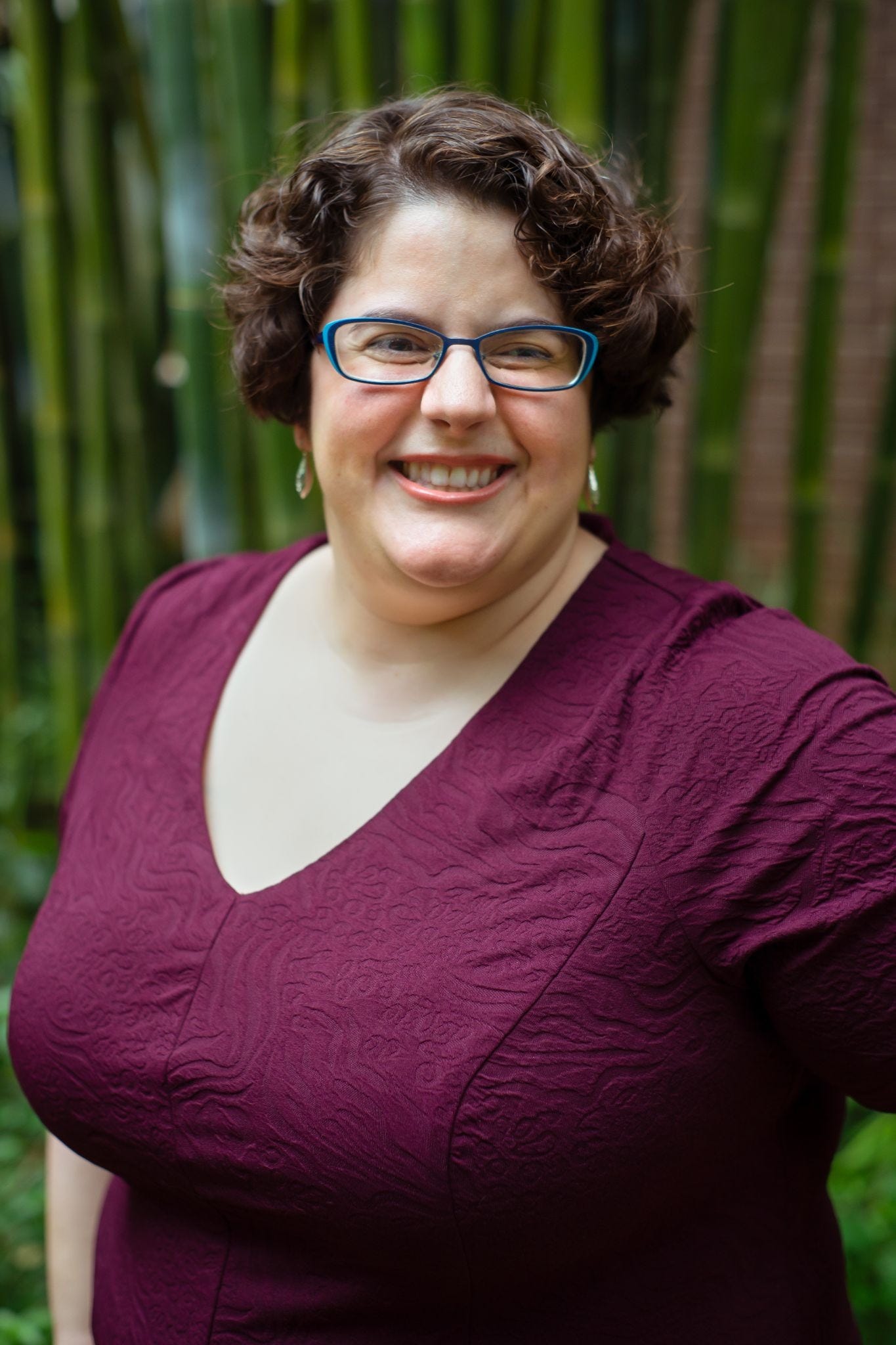
Emily K. Michael has been an English teacher for 14 years. She taught college for 8 years and just finished her 6th year of teaching high school. She teaches all levels of college and high school English, journalism, creative writing, poetry, AP, and dual enrollment. Her latest book, At Every Stage I’ve Been, is forthcoming in October from Finishing Line Press.
What did your Science of Reading or Science of Learning journey look like, and how did they intersect
I feel like my path has been somewhat nontraditional. I didn’t major in education—I majored in English. So when I got a job teaching English, I realized I knew the content well, but I wasn’t really prepared to teach it.
At first, I relied on what felt right. Then I started reading about how to teach college English, beginning with the materials my department asked us to read. Before long, I found myself reading every source cited in those articles. I’d read an article, then work my way through its entire bibliography.
Along the way, I became more interested in writing instruction than reading instruction. I also started independently researching Science of Learning materials.
Because of that, I sometimes feel like I don’t use the same terminology as others in education who came through traditional teacher preparation programs. My understanding developed in a more organic way rather than through a formal education degree pathway.
What are 3 effective practices you use in your classroom?
One thing I do is a “Poem of the Week.” Every week, I try to incorporate it into all levels of English, even if the course isn’t focused on creative writing. I either project the poem on the board or provide students with a hard copy, and we work through a consistent set of six questions together.
The questions are: What do you see in the poem? which directs students to identify imagery; What do you hear? which focuses on sound; What words do you notice? which encourages them to identify poetic language; What feelings is the poet expressing, or what feelings are you having as a reader? What questions does the poem ask? and What promises does the poem make?
Even if we don’t complete the activity every single week, students encounter it 20 to 30 times throughout the year. They become familiar with the routine, and I find that poetry analysis becomes much less intimidating because they have a consistent framework for approaching it.
Another strategy I use is reader’s theater when we study Shakespeare. Students rehearse before performing, and I assign student directors and stage managers who help organize the class, keep track of absences, and reassign roles as needed. Each student has a character, and they’re assessed on their dramatic reading, but they have time to prepare through rehearsals. We typically do this two or three days a week during our Shakespeare units.
This approach gets students much more engaged with the text. They’re more willing to read the play when they know they have a character to perform or might step into another role if needed. It’s also very student-driven. After making the initial cast assignments, I step back and simply guide them on what we’ll read each week. The students coach one another and help each other with pronunciation, interpretation, and understanding the context.
A third strategy I use during novel studies is weekly audio responses. If we’re spending nine weeks reading a novel like Jane Eyre or Great Expectations, students submit an audio reflection each week. It’s similar to an audio annotation: they complete annotations as they read and then respond to a set of categories I’ve created. They can choose which categories to focus on each week, such as vocabulary, historical context, characters and relationships, or other aspects of the novel.
In their recordings, students essentially create a short podcast discussing the book. I like this format because it’s more difficult to rely on AI-generated responses, and it gives students greater ownership over their reading. Rather than asking everyone to focus on the same elements each week, they can pursue what interests them most. For example, a student who isn’t particularly interested in literature but enjoys history might focus on the novel’s historical references, while another student might explore the author’s writing style or vocabulary. Giving students that choice makes them more engaged and invested as readers.
What type of professional learning is most effective for you and why?
I learn best in two ways: by reading books that I’m genuinely interested in or by participating in live professional learning sessions.
For example, I found the Teaching That Succeeds Conference especially valuable because it featured teachers demonstrating, in real time, strategies that actually work in the classroom. That kind of practical, interactive learning is much more effective for me.
In contrast, I don’t find a lot of pre-recorded online professional development very helpful. Our district requires quite a bit of online coursework, but it often feels generic and impersonal. It seems like content that’s been packaged in advance rather than designed for meaningful engagement.
I also don’t find online discussion boards particularly useful. Even if it’s over Zoom, I think it’s much more valuable to have real-time conversations with other teachers where we can ask questions, exchange ideas, and work through challenges together.
I learn best through authentic interaction with other educators, rather than through pre-made presentations or slide decks that are simply delivered without opportunities for discussion.
How do you try to pay your knowledge/learning forward so others can benefit?
A lot of that comes from mentoring teachers on the job. Whenever we have new teachers or teachers who have been assigned to a new subject area, I try to make myself available. I enjoy helping other teachers with lesson planning or working toward certification. I find that process rewarding.
I’ve also learned a great deal from teachers who have more experience than I do, so I have no problem with colleagues coming into my classroom to observe me at any time. Likewise, I’m happy to observe their teaching or sit down with them to brainstorm lessons and share ideas.
I also write articles on my blog whenever I come across something I think would be valuable to other teachers. For example, if I read a book that I find especially useful, I’ll write about the key takeaways so other educators can discover those ideas and apply them in their own classrooms.
Overall, I think it’s important to make yourself available to others. I don’t pretend to know everything, but I do know what works in my classroom. If I can support another teacher—whether that’s in person or online—and help them in some way, I think that’s worthwhile.
What has led you to your success in your classroom or at your school?
Listening to students is one of the most important things a teacher can do. We all have ideas about what we want our classrooms to look like, and we all imagine that ideal classroom where everything goes according to plan. But instead of getting frustrated when something isn’t working, I think it’s important to ask students directly whether the activity is working for them. I’m not there for myself—I already know the material. I’m there for my students, so if something isn’t helping them learn, I need to know that.
I think this is especially important for new teachers. When a lesson doesn’t go as planned, it’s easy to assume the students aren’t trying or that the teacher has failed. Instead, it’s more productive to ask, “How can we adjust this activity so students can be more successful?”
In my experience, students are often very honest about what is and isn’t working for them. I’ve always believed that even the most disengaged student can recognize good teaching. They can tell when a teacher is genuinely invested, and they can tell when someone is simply going through the motions.
That’s why I think we should trust our students’ feedback. Asking them whether our instruction is helping them learn provides valuable insight and helps us become more effective teachers.
Emily’s contact:
Substack: @emilythepoet
X: @emilykmichael
Email: poetemilymichael@gmail.com