Data: Moving Beyond the Colors
(bridging the gap between kindergarten and first grade)


At my school, our first-grade team uses a “Walk to Read” model. So far, we have been using this system for two years, and in our second year, we increased the number of students who were proficient or above on their DIBELS 8 benchmark assessments.
One of the ways we improve each year is by reflecting on our system. We look at data to give us a picture of where we ended up and where the next group of rising kindergarten students will be coming in.
For those of you who have taught first grade, there is a gap between where our kindergarten students end the year and where they are expected to begin first grade.
Our kindergarten students take DIBELS measures in letter names, phoneme segmentation, nonsense word fluency, and word reading. When they enter first grade, they are given all of those same assessments, but an oral reading fluency passage is added.
In individual skills, our kindergarten students did really well this year. They ended the year with
81% of students at or above proficiency on the Nonsense Word Fluency (NWF) letter/sound measure, and 87% at or above proficiency on the NWF decoding measure. The colors look great. Mostly blue and green for above and benchmark, but when we look past the colors to the behaviors of reading, we noticed that only between three to five of those same students can blend a CVC word in one try. The rest of the students, while pretty accurate, are saying each sound and recoding (e.g., “c-a-t, cat”). To attain proficiency on the NWF benchmark at the end of kindergarten, a student needs to read 31 sounds and 7 words. Many of our students, even after recoding, were able to attain these cut scores; however, if you look at their tests, you can see that the majority of words were read sound by sound and recoded.
This isn’t the full picture of the assessment, but this child read 78 sounds and 26 words, which placed the student into the above category. While this achievement should be celebrated, we also need to dig deeper.
Example: EOY Kindergarten NWF measure
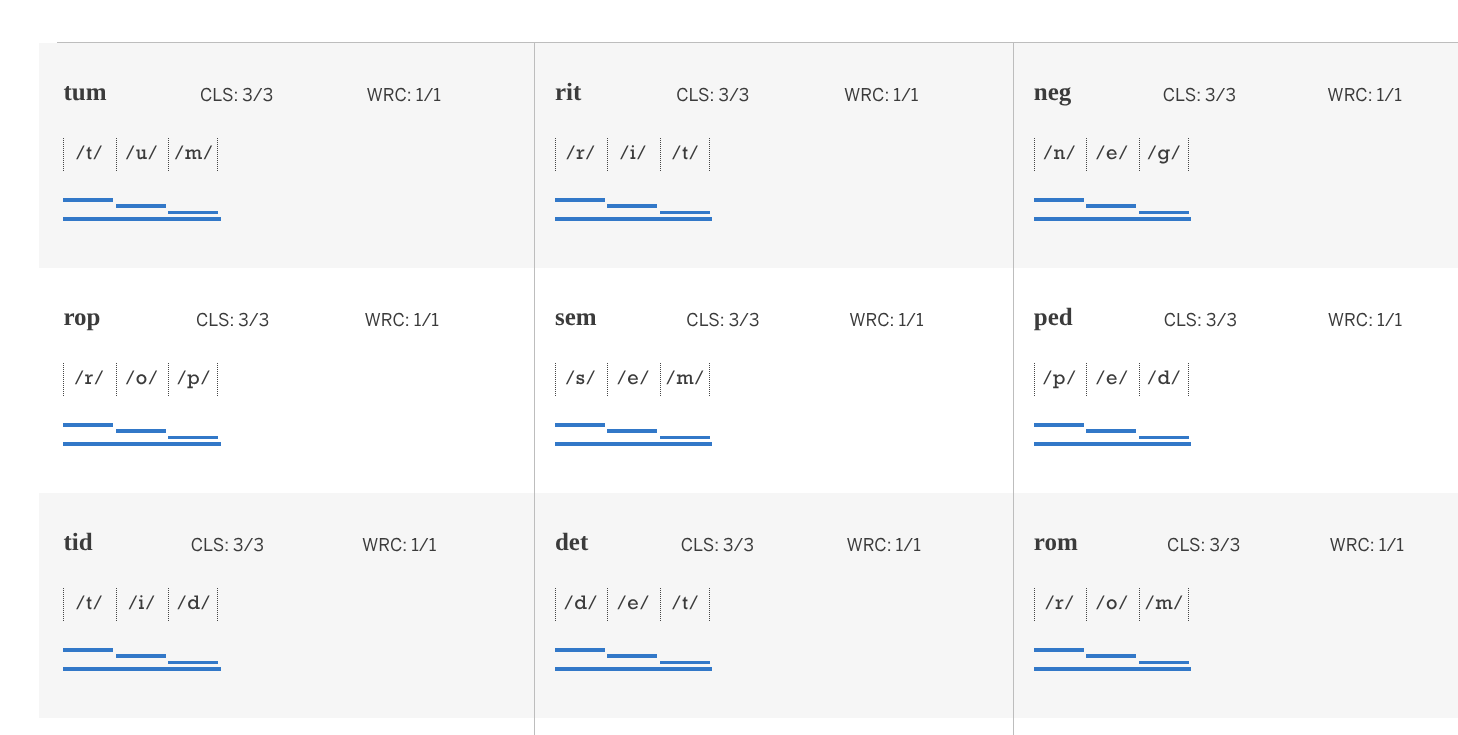
On first glance, this looks fantastic, but if this child arrives in first grade reading like this, they will not do well on the oral reading fluency passage. While they have learned an isolated skill, this particular skill does not easily translate to reading a text fluently. This is a major gap in our curriculum. On paper, our kindergarten students look ready, but when they get to first grade, their first decodable text is a full-page story with sentences. They are not prepared.
This is not to say that they won’t learn, of course, many children will, but many children will struggle with this particular skill well into the school year, delaying their ability to read text fluently. This is what the data has told us over the past several years, and while colors look nice, they don’t tell the whole story.
Example: EOY Scores for DIBELS 8 Measures in Kindergarten
Comp. LNF PSF NWF NWF WR
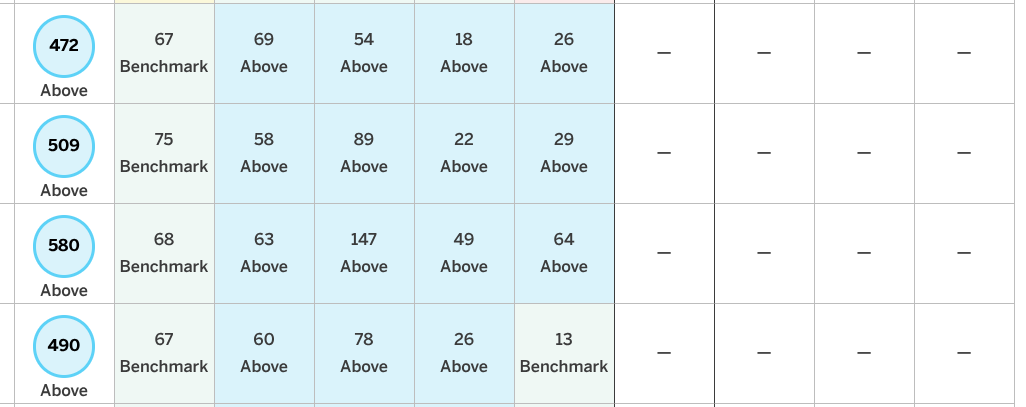
Our team is currently reflecting on this finding and trying to figure out how we could help support our kindergarten teachers in closing this gap. The first step is awareness of the gap in the curriculum. The second step is understanding what the data shows, and the third step is adjusting our instruction to eliminate this gap.
If you work on a first-grade team, I’m guessing this gap plagues your team. Breaking the habit of recoding words is difficult. Instead, instruction that includes continuous blending (e.g., mmmmaaatttt) or having students fade from sounding out to reading the “fast way” (e.g., saying the entire word the first time) is another option. Both of these strategies are minor instructional adjustments but have a major impact on reading fluency. The other piece is that students need lots of practice and repetition in connected text. It is extremely challenging to leap from isolated word work to connected text.
The point of all of this is to say that once your team has taken the time to really understand the data, then it is time to change your instruction. Otherwise, there is little value in collecting the data. This is what our team is committed to doing moving forward. I wonder how many other schools have noticed these same results?
Data can be powerful, but it can also be misleading. These are the types of tweaks that mean the difference between acceleration and stagnation.
Important and brilliant. It's subtle but if that shift to continuous blending begins in K, it will reap huge rewards. Thank you so much Elana for this insightful article and for always seeming to ask the right questions--and then sharing.